HIPAA Privacy Policy
HIPAA (long form: Health Insurance Portability and Accountability Act) created guidelines for healthcare in the US. HIPAA was passed by Congress in 1996, when the Internet was called the World Wide Web, and Amazon only sold books, and it was one of the country’s first data privacy laws.
The Secretary of Health and Human Services began enforcing HIPAA’s laws governing the protection of Personal Health Information (PHI). It was a farsighted approach taken by Congress since many medical providers did not transition to electronic medical records until Congress provided a $35 billion incentive in the economic recovery package bill passed in 2009.
Healthcare is a significant industry in the US with a large presence nationwide. In 2019 itself, the expenditure on healthcare accounted for 17.7% of the US GDP, or $11,582 per person. Prescription medicines are the third most expensive category of healthcare after hospitalization, and for a patient who doesn’t need hospitalization.
HIPAA, which has changed since it was first passed, requires strict data privacy protections. And those restrictions apply at a local pharmacy as well as a university hospital.
The Significance of Keeping PHI Discreet
The information included in medical files, particularly those kept at pharmacies, is something hackers and people who commit online data theft would want to lay their hands on. A data breach can reveal a patient’s name, contact information, home address, DOB, SSN (Social Security Number), and credit card details, which is an evident risk of data theft.
Besides that, hackers can also exploit information on diagnosis, prescriptions, treatments, the doctors who are specialists, and the patient’s insurance information to deliver bills for phony services in elaborate scams that have long-term consequences.
Patients definitely prefer to keep their PHI private for several reasons. They may fear getting sacked if their employer gets to know about their diagnosis, or their PHI may include the psychiatrist’s notes that may reveal that they are not mentally fit to work, as well as the drugs they take.
Protecting PHI is the right thing to do, yet HIPAA imposes serious consequences for failing to meet its privacy standards.
HIPAA Rules for Pharmacies
Pharmacies are generally considered a hub of activities. Some patients seek professional help regarding information about the medicines they take, while others deliver and collect their medicines. Health experts also provide vaccinations and answer phone calls from patients and clinics.
There is a greater chance of unintentionally disclosing PHI when you mix the high volume of work with a pharmacy where one-on-one interaction is not a rarity.
Pharmacies play an important role in medical care in the US. Every pharmacy serves a large population since two out of every three adult Americans take at least one medicine available in the market.
HIPAA covers prescription and billing records, as well as any information health experts may require about their patients. Because nearly all health experts submit payment requests electronically, they must follow HIPAA regulations that protect patient privacy.
To ensure following HIPAA, all suppliers who get in touch with pharmacy PHI must execute a business associate agreement (BAA).
All workers associated with healthcare, including the staff working at pharmacies, are expected to protect each patient’s privacy. When the staff use or disclose PHI inappropriately, or agree for an unhindered access to it, they put a patient’s privacy in danger.
A pharmacy is most likely the place where patients interact with the medical field. Protecting each patient’s sensitive information is critical to maintaining the trust they have in the healthcare system.
Changes to Your Health Information
You have the right to request in writing that any PHI about yourself can be corrected or changed. We are under no compulsion to make the required adjustments, but we will consider them for sure before deciding if they are worth processing. All requests to update the information we have about you must be in writing, duly signed by you or your legal guardian, and we would also want you to mention the reason for omission or correction.
Notice About Health Information and Third-Party Services
This notice does not address, and we are not responsible for, the privacy of any third-party information, or other activities, such as data privacy policy, safety policies, and standards. Including health experts, who use the Services, the manufacturer of the mobile you are using, any other IT hardware and software, and any third-party mobile application, website, or service you may use.
The Breach Notification Rule
This HIPAA rule describes the steps health experts must take to protect the unprotected PHI provided to a third party. Pharmacies are required to regularly inform the HHS Office for Civil Rights and the people whose PHI has been exposed. The notification should include the breach, what happened, what information was left unprotected, and what steps the pharmacy is taking to cover up the damage.
Complaints
If a patient believes we have violated their HIPAA rights in relation to the patient’s PHI or if they disagree with a decision we made about access to the patient’s PHI, they can make a written complaint with our Contact Person. Our Contact Person is in charge of taking up the matter, and if possible, resolving each complaint and informing the patient accordingly. The HHS Office may also receive a formal complaint from the patient.
Final Words
We are required by law to protect the privacy of our patients’ PHI, to give this notice about our privacy procedures, and to carry them out as mentioned in this notice. We reserve the right to change our privacy procedures, which will apply to all PHI that we store. Before any significant change, a fresh notification will be given upon request, and if you still don’t mind the changes made, it shows you are willing to give the benefit of the doubt when it comes to your healthcare needs, and we promise that we won’t let you down. That’s why we want to tell you that you should buy the drug only after knowing everything about it, and make sure that you take it when you need it.
Coupon Code
Use Coupon Code
Check Details On Payment Page
-
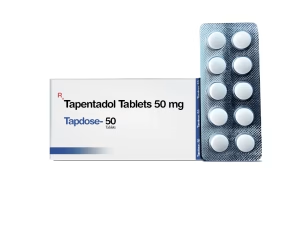
Buy Tapentadol Online -
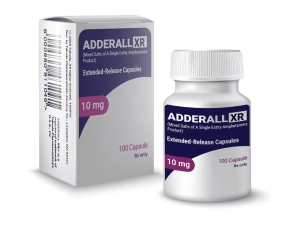
Buy Adderall Online -
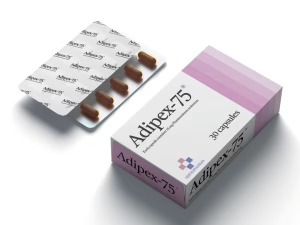
Buy Adipex Online -
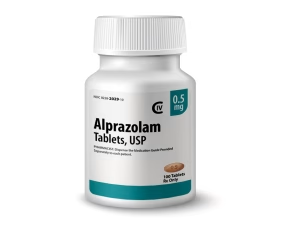
Buy Alprazolam Online -
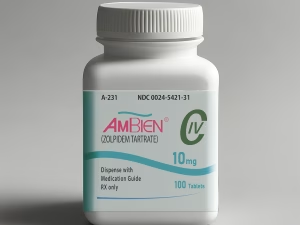
Buy Ambien Online -
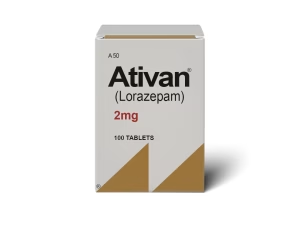
Buy Ativan Online -
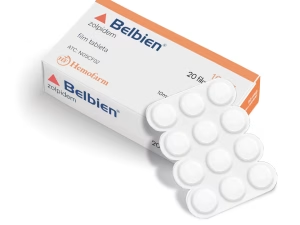
Buy Belbien Online -
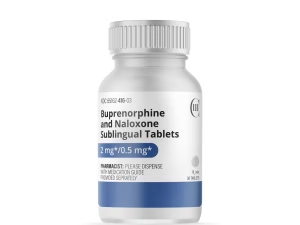
Buy Buprenorphine Online -
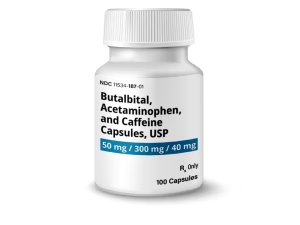
Buy Butalbital Online -
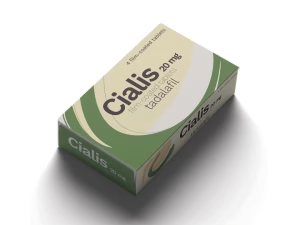
Buy Cialis Online -
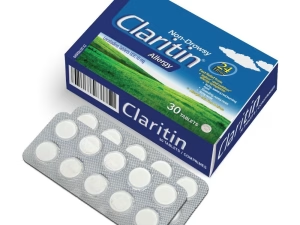
Buy Claritin Online -
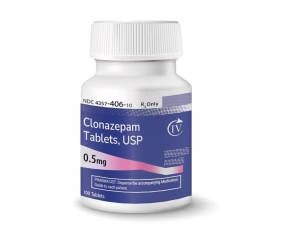
Buy Clonazepam Online -
Buy Codeine Online -
Buy Diazepam Online -
Buy Dilaudid Online -
Buy Farmapram Online -
Buy Fioricet Online -
Buy Gabapentin Online -
Buy Hydrocodone Online -
Buy Hydromorphone Online -
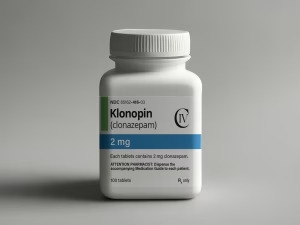
Buy Klonopin Online -
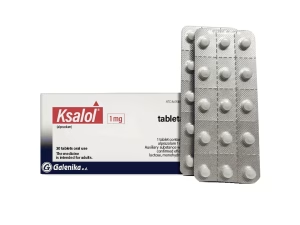
Buy Ksalol Online -
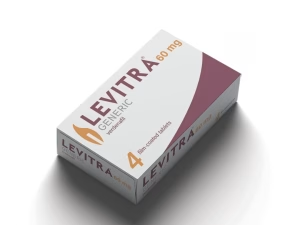
Buy Levitra Online -
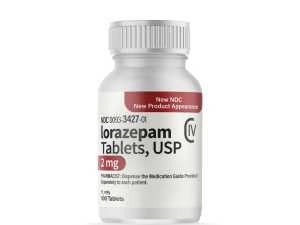
Buy Lorazepam Online -
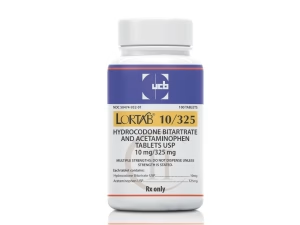
Buy Lortab Online -
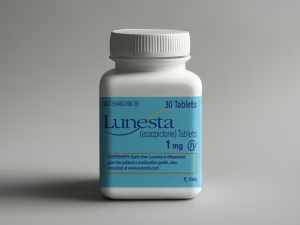
Buy Lunesta Online -
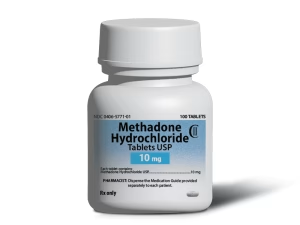
Buy Methadone Online -
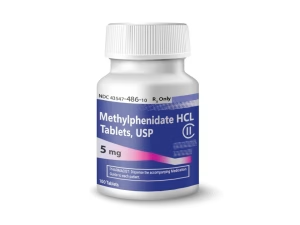
Buy Methylphenidate Online -
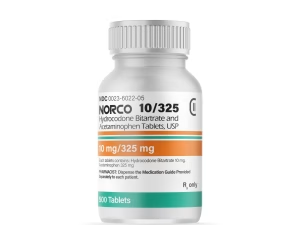
Buy Norco Online -
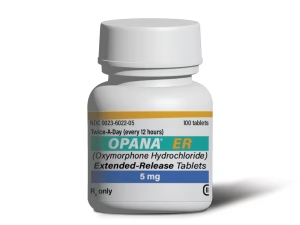
Buy Opana ER Online -
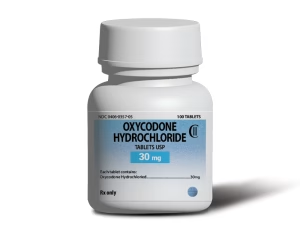
Buy Oxycodone Online -
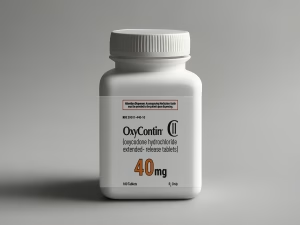
Buy Oxycontin Online -
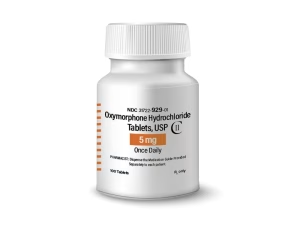
Buy Oxymorphone Online -
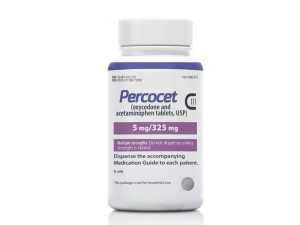
Buy Percocet Online -
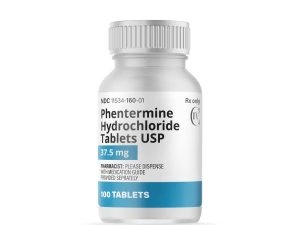
Buy Phentermine Online -
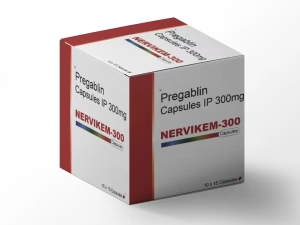
Buy Pregabalin Online -
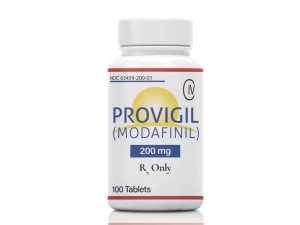
Buy Provigil Online -
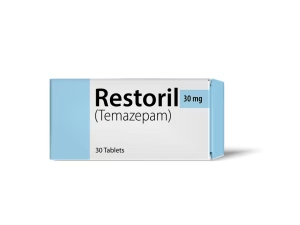
Buy Restoril Online -
Buy Ritalin Online -
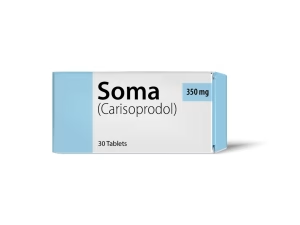
Buy Soma Online -
Buy Suboxone Online -
Buy Tramadol Online -
Buy Valium Online -
Buy Viagra Online -
Buy Vicodin Online -
Buy Xanax Online -
Buy Zolpidem Online