Editorial Policy
Co-authors’ contributions
It is strongly suggested that authors include a statement at the end of the paper that acknowledges each co-author’s contribution. Two co-authors might be recognized as having made equal contributions to what is being studied here.
Minimum Writing Requirements
Each author who writes for our website must be eligible for ownership, and every individual should be tested. Each author must have made a significant contribution to the work to be deemed responsible for the relevant portions.
Artificial Intelligence (AI) Resources
The application of artificial intelligence techniques in study and writing is expanding. Generative AI, massive language models, and chatbots are examples of AI-based technologies, although they are not the only ones.
While we acknowledge the growing use of AI tools in academic research, AI does not necessarily meet the authorship standards we have come to expect since they cannot:
- Take responsibility for the submitted material, disclose any conflicts of interest, and manage copyright or license agreements
When authors utilize AI tools to write an article, create photos or graphics, or collect and analyze data, the material should include relevant disclaimers and/or statements that explain how and which AI tool was used.
According to the COPE position statement, authors are responsible for any violation of publication standards since they are in charge of the content of their articles, including any elements created by AI technologies.
Copyright Infringement
All articles submitted to us are considered for publication only if they have not been published previously or are not being considered for publication elsewhere. Authors will be asked to certify the validation of their work and that neither the article nor one that is essentially similar by the author has been published or is being considered for publication anywhere else, except as described in an attachment, and copies of intertwined manuscripts will be provided.
We expect authors to obtain the necessary permissions before publishing, and references to other people’s work or ideas in an article must be given their due credit.
If you require help in acquiring permissions, please contact the editor because they might be able to do so on your behalf.
The use of published or unpublished ideas, or other intellectual property generated from other sources, without acknowledgment or authorization. Every accusation of plagiarism will be carefully examined in accordance with the COPE guidelines.
Disclosures and Competing Interests
Authors must state clearly whether or not possible disputes exist, including associations that could be personal or financial could impact their actions, and any potential conflict of interest should be outlined in a separate section of the published article and at the time of submitting the article. Authors must specify if they have received assistance in writing and identify the sources that helped in financing.
Authors must declare that they have revealed any affiliations with or any financial participation with any organization or institution that has a financial interest in or against the subject matter or materials covered in the article.
Please be aware that financial assistance can be in any form, such as employment consultancies, remuneration, shareholding, professional opinion, grants or pending patents, and royalties. Other financial involvement is not excluded from the list. Details of relevant conflicts of interest (or lack thereof) must be disclosed in the article for all listed authors.
Friendly reviewers must disqualify themselves from reading particular manuscripts if they feel it is all right, and they must report any conflict of interest that may influence their assessment of the manuscript.
Modifications
Before being published on our website, all articles will undergo subediting for style, punctuation, and spelling. We attempt to process articles as quickly as possible.
The production timeline, the anticipated date of publication, and any delays will be communicated to the authors. To get proofs for approval, authors must stay in touch.
Friendly Review
A portion of our articles undergo friendly review to guarantee their objectivity, scientific accuracy, and clinical relevance. All papers are examined by at least two professionals, chosen based on their experience and skill, and the process often takes three to four weeks.
The ultimate objective is to provide a helpful assessment of the paper and suggest areas where there is scope for improvement. The review is double-blind, with the identities of the friendly reviewers and author(s) kept confidential. Friendly reviewers are required to declare any conflicts of interest that might interfere with their ability to assess the submission impartially.
Friendly reviewers are expected to fill out a template report form and provide both general and specific comments to the author or authors, as well as general comments to the content editor. Additionally, a thorough response to the editor’s criticisms is necessary. Manuscripts may be approved at this stage, but depending on the nature of the comments and the amount of editing required, articles may require additional friendly review. The content editor has the last say in approving or rejecting the article before publication.
If an author believes a content editor erred in denying a paper, they might file an appeal. The appeal letter should explain why the author or authors believe the decision was incorrect and offer complete, aimed responses to any criticism regarding the article’s rejection. Additional assistance from the content editor and/or other external experts will be pursued to evaluate the eligibility for re-review.
The Right of Patients to Privacy
Patients should not have their right to privacy violated without their consent. Unless the patient, their parents, or legal guardian provides written consent for publishing information related to the patient, they should not be included unless necessary for scientific purposes. To obtain informed consent, the patient must be shown that the manuscript will be published. When the consent is received, it should be duly noted in the manuscript.
To ensure patients’ privacy, the information related to them should be removed where it is not required. However, no patient data should be changed or made up. If there is an uncertainty that privacy cannot be guaranteed, writers should contact the content editor, who will be able to provide assistance and the necessary authorization forms for completion.
Coupon Code
Use Coupon Code
Check Details On Payment Page
-
Buy Tapentadol Online -
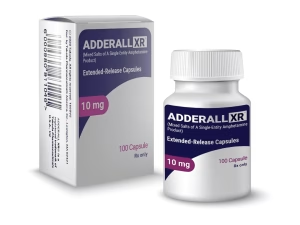
Buy Adderall Online -
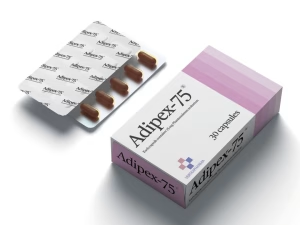
Buy Adipex Online -
Buy Alprazolam Online -
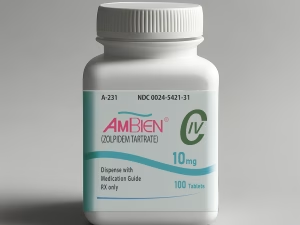
Buy Ambien Online -
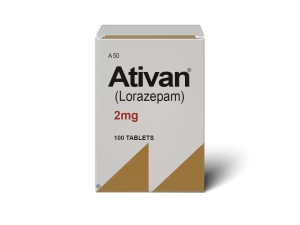
Buy Ativan Online -
Buy Belbien Online -
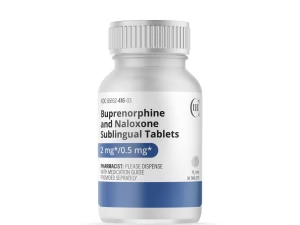
Buy Buprenorphine Online -
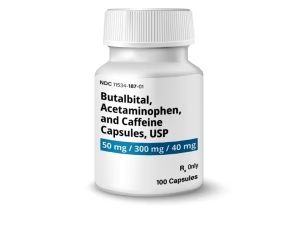
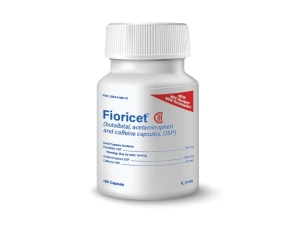
Buy Butalbital Online -
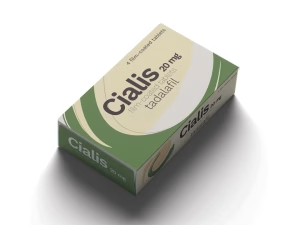
Buy Cialis Online -
Buy Claritin Online -
Buy Clonazepam Online -
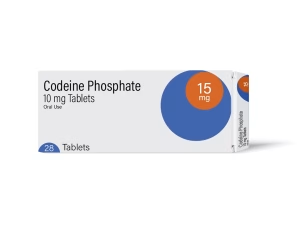
Buy Codeine Online -
Buy Diazepam Online -
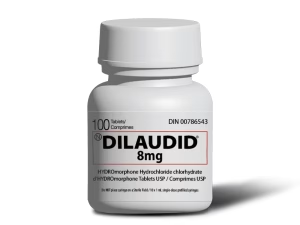
Buy Dilaudid Online -
Buy Farmapram Online -
Buy Fioricet Online -
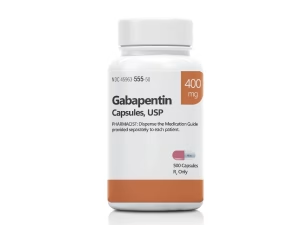
Buy Gabapentin Online -
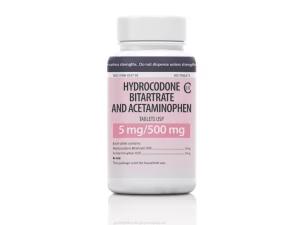
Buy Hydrocodone Online -
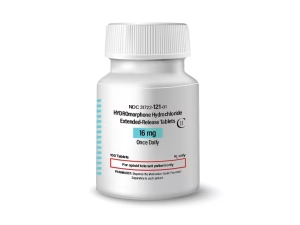
Buy Hydromorphone Online -
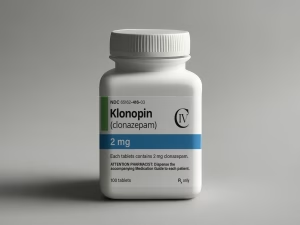
Buy Klonopin Online -
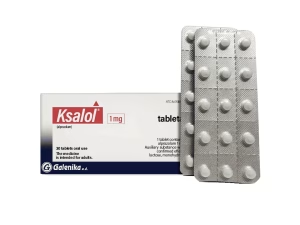
Buy Ksalol Online -
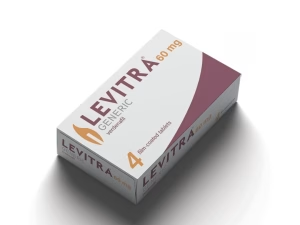
Buy Levitra Online -
Buy Lorazepam Online -
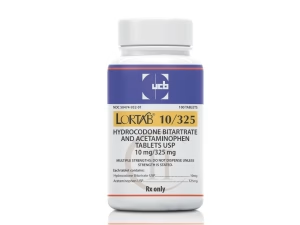
Buy Lortab Online -
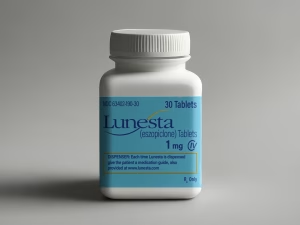
Buy Lunesta Online -
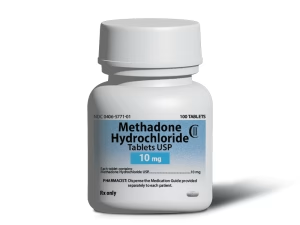
Buy Methadone Online -
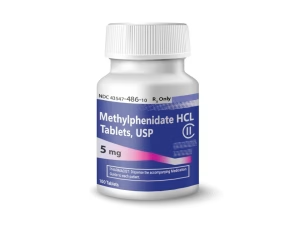
Buy Methylphenidate Online -
Buy Norco Online -
Buy Opana ER Online -
Buy Oxycodone Online -
Buy Oxycontin Online -
Buy Oxymorphone Online -
Buy Percocet Online -
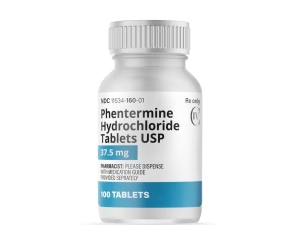
Buy Phentermine Online -
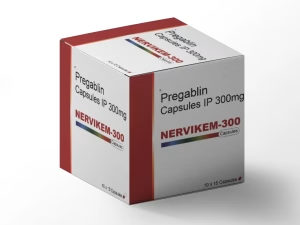
Buy Pregabalin Online -
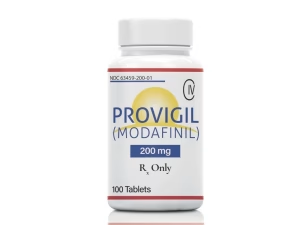
Buy Provigil Online -
Buy Restoril Online -
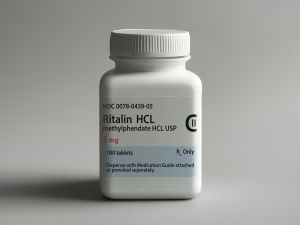
Buy Ritalin Online -
Buy Soma Online -
Buy Suboxone Online -
Buy Tramadol Online -
Buy Valium Online -
Buy Viagra Online -
Buy Vicodin Online -
Buy Xanax Online -
Buy Zolpidem Online