FDA Compliance
For your customers, your product is a guarantee of effectiveness, safety, and quality. In controlled businesses, the FDA legally upholds this commitment. Meeting its requirements is the ultimate proof that your brand is trustworthy. This is not integrating a quality mindset into every aspect of your business, and not about putting together a folder of records to show to an authoritative figure. A good compliance program protects your customers, reputation, and essence from the procurement of raw materials to the feedback received by customers.
Important Lessons
The blueprint for your operations is compliance:
FDA standards are more than just guidelines, as they lay the base for a safe and effective business. A Quality Management System (QMS) translates these criteria into daily procedures that help your team and your clients to stay safe.
You are accountable for the full existence of your product:
A drug being put up in the market for sale is only the first step. To ensure lengthy compliance, you must manage every stage, from obtaining what is currently trending in the market and registering your facility to handling how the drug is performing in the market after it is out for sale, and if any complaints have been reported against your product.
Your proof of action is your thorough documentation:
Your records are your most valuable asset when it comes to abiding by the administration. During an FDA investigation, having well-organized documentation for each procedure, test, and training gives you solid proof that you need to show your dedication to quality.
Describe FDA Compliance
Making your product reach the market is an achievement in itself, but it comes with an important responsibility, which is making sure it’s safe, effective, and accommodating. This is where the Food and Drug Administration steps in. The first and foremost step for every company operating in a controlled industry is understanding what FDA compliance implies. It’s about establishing trust with your customers and authorities.
Consider adhering to norms as the blueprint for your operations. It guides on how to create, manufacture, label, and promote your products. While the guidelines may look complicated on the surface, they all have one goal, which is protecting public health.
Core Principles (and Common Misconceptions)
At its core, FDA Compliance follows the guidelines established by the FDA. By ensuring that products like medicines and medical equipment work as intended, the guidelines aim to protect public health. It is an oversight system that ensures the items used by people almost regularly do not end up negatively affecting them.
However, there might be far-reaching misconceptions that may result from the complications of these guidelines. For example, there is a common misconception that advertising a product for reasons other than those for which it is intended is illegal. The reality is far more complicated. Promoting medicines taken for reasons other than for which it is recommended in the first place is not always banned, especially if the method of intake is suggested by someone like a health expert. Developing a compliance marketing strategy helps in understanding these subtleties.
The FDA’s Risk Classification System
Because the intake of every product carries a different level of risk, the FDA does not treat them equally. To determine how much regulatory monitoring a product requires, the FDA employs a risk-based classification system. This ensures that the product with a higher level of risk affordability gets the most assessment by authoritative bodies.
One common example of this system is found in medical gadgets. The FDA divides devices into three categories according to their level of risk. Class I has low-risk items like tongue depressors (subject to general restraints). Class II includes moderate-risk devices, like powered wheelchairs (requiring unique oversight). Class III is set aside for the riskiest items, including heart valves, which must pass a severe pre-market approval procedure to demonstrate their effectiveness and safety before they can be put up in the market for sale.
Determining the Authority and Scope of the FDA
FDA guidelines are legally mandatory and not just recommendations, as the agency has enough weight and influence because the published official FDA rules and regulations are dictated by federal law, giving them considerable weight and power. Your company is legally required to observe all guidelines that apply to your specific products and operations.
To ensure obedience to these laws, the FDA employs strong enforcement authorities. The agency can inspect facilities, send official warnings, and take further action if problems remain unresolved. This may include seizing products, requesting recalls, or filing a lawsuit. It also emphasizes having a strong and proactive adherence program from the start.
The Relevance of FDA Regulations
FDA guidelines set quality and safety standards for pharmaceutical products, including cGMP (Current Good Manufacturing Practice) rules, which cover production methods, facility requirements, and quality control procedures to make sure medicines contain the right ingredients. Obeying these rules is necessary for the patients and the legal sale of products. Adherence also includes proper documentation, audit records, and the use of licensed and secured software systems. The inability to meet these standards can amount to production limits, recalls, and even the shutdown of businesses.
Final Words
Following FDA guidelines is crucial for pharmacies. Although the administrative process may seem difficult initially, it plays an important role in the protection of public health and the long-term success of a pharmacy. By understanding FDA guidelines, identifying the challenges that commonly come with adherence, and applying the recommended practices, pharmacies can meet legal requirements and grow successfully in a field focused on care and discovery. However, medicines should always be taken with the help of a health expert, and you can also seek professional help before taking any medicine. Yet, you must be aware of all the information about the particular drug you plan to take before starting its consumption, and if you experience any unwarranted side effects after taking it, seek medical help immediately. It is not advisable to believe everything mentioned on this website as the gospel truth and avoid gaining medical attention, which could be harmful and may decrease your mortality.
Coupon Code
Use Coupon Code
Check Details On Payment Page
-
Buy Tapentadol Online -
Buy Adderall Online -
Buy Adipex Online -
Buy Alprazolam Online -
Buy Ambien Online -
Buy Ativan Online -
Buy Belbien Online -
Buy Buprenorphine Online -
Buy Butalbital Online -
Buy Cialis Online -
Buy Claritin Online -
Buy Clonazepam Online -
Buy Codeine Online -
Buy Diazepam Online -
Buy Dilaudid Online -
Buy Farmapram Online -
Buy Fioricet Online -
Buy Gabapentin Online -
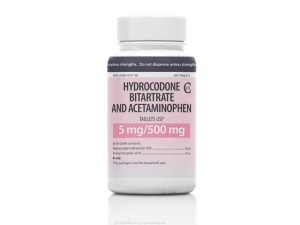
Buy Hydrocodone Online -
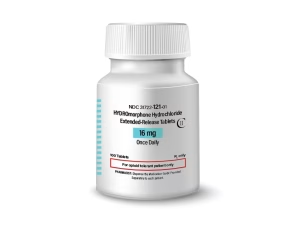
Buy Hydromorphone Online -
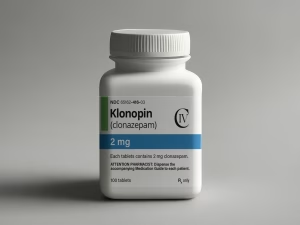
Buy Klonopin Online -
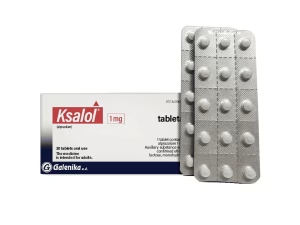
Buy Ksalol Online -
Buy Levitra Online -
Buy Lorazepam Online -
Buy Lortab Online -
Buy Lunesta Online -
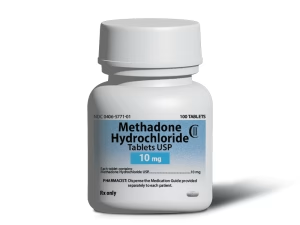
Buy Methadone Online -
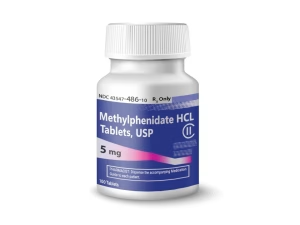
Buy Methylphenidate Online -
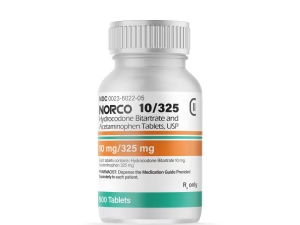
Buy Norco Online -
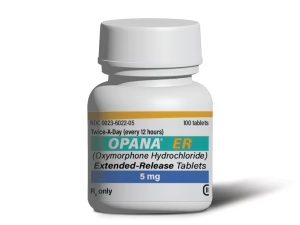
Buy Opana ER Online -
Buy Oxycodone Online -
Buy Oxycontin Online -
Buy Oxymorphone Online -
Buy Percocet Online -
Buy Phentermine Online -
Buy Pregabalin Online -
Buy Provigil Online -
Buy Restoril Online -
Buy Ritalin Online -
Buy Soma Online -
Buy Suboxone Online -
Buy Tramadol Online -
Buy Valium Online -
Buy Viagra Online -
Buy Vicodin Online -
Buy Xanax Online -
Buy Zolpidem Online